If Nashville home prices have you wondering how to make the numbers work, house hacking may be worth a closer look. In a market where Greater Nashville REALTORS reported a $503,340 median single-family price across the nine-county region in April 2026, and Redfin placed Nashville’s city-level median sale price near $474,655 that same month, many buyers are looking for practical ways to offset a monthly mortgage. The good news is that house hacking can work here, but only if you match your plan to Nashville’s zoning, occupancy, permit, and financing rules. Let’s dive in.
What house hacking means in Nashville
House hacking usually means buying a home you live in and using part of it to generate income. That could mean renting another unit, leasing bedrooms, or adding a detached unit where local rules allow it. The goal is simple: reduce your housing cost while building equity.
In Nashville, the important part is that these plans are not one-size-fits-all. Metro treats many house-hacking decisions as parcel-specific zoning questions, so you cannot assume a home can legally become a duplex, support a DADU, or operate as a rental setup just because the layout seems to work.
Why house hacking gets attention now
With home prices still elevated, even a modest amount of rental income can change your monthly budget. For some buyers, that can improve affordability enough to make homeownership feel more realistic. For others, it creates a path to buy smarter without jumping straight into a full investor loan structure.
That said, Nashville buyers should think about house hacking as a strategy that starts with compliance, not creativity. Before you plan around future rent, you need to confirm what the property legally allows and what your financing will actually support.
Best house hacking options in Nashville
Owner-occupied duplex
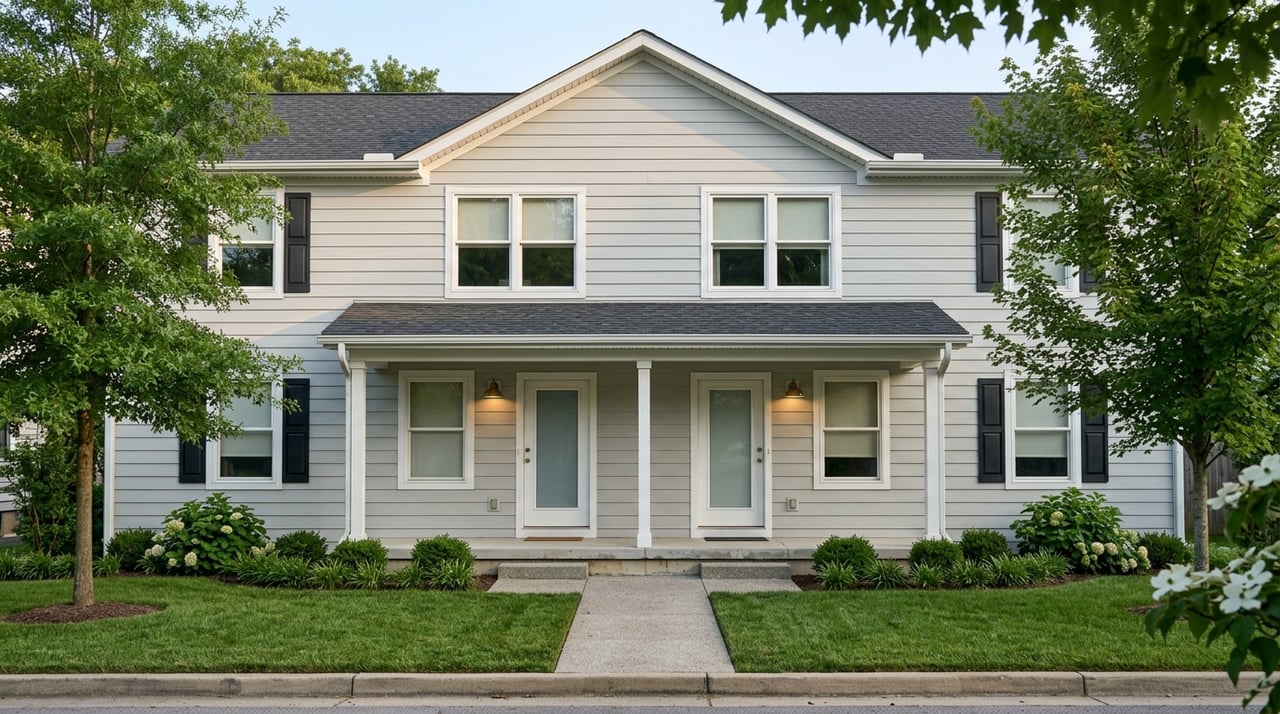
One of the most common approaches is buying a duplex, living in one side, and renting the other. This is often appealing because the rental use is straightforward if the property is already legally set up for that use. It also keeps your living arrangement fairly separate from your tenant.
The catch is zoning. Nashville makes clear that allowed use depends on the parcel’s current zoning and any overlay restrictions, so you need to verify the property can legally function as a duplex before you rely on that plan.
Owner-occupied 2-4 unit property
For many buyers, this is the most finance-friendly version of house hacking. FHA loans are available on 1-4 unit properties and can require as little as 3.5% down. Freddie Mac guidance also allows owner-occupied 2-4 unit properties and says rental income from the other units may be counted in underwriting when the file supports it.
If you are an eligible veteran, VA financing can also apply to multi-family properties up to four units when you occupy one of the units. That combination of owner occupancy plus rental income potential is a big reason small multifamily gets so much attention.
Renting bedrooms in a single-family home
Renting out bedrooms can be a simpler entry point if you do not find the right duplex or small multifamily property. You still live in the home, and room rent may help offset your payment and utilities. For some buyers, this is the easiest way to test the strategy before taking on a more complex property.
But Nashville’s occupancy rules matter here. Metro says that when all occupants are not related by blood, marriage, or law, no more than 4 people may live in a dwelling with three or fewer bedrooms, and no more than 5 people may live in a dwelling with four or more bedrooms. Metro also requires minimum bedroom size and independent access to communal space, and if a property operates more like a rooming or boarding house, a permit may be required.
DADU strategy
A detached accessory dwelling unit, often called a DADU, can sound like an ideal house hack. You live in the main home and rent the detached unit, or the reverse if allowed by the specific setup. In practice, though, this option requires more due diligence than many buyers expect.
Metro allows DADUs only in limited circumstances. The detached unit must be on the same lot as the principal structure, owned by the same person, and one of the two dwellings must be owner-occupied. Only one DADU is allowed on a parcel with one single-family principal structure, and Metro also states that new DADUs on certain single-family, Residential Neighborhood, and Residential Limited lots cannot be used as owner-occupied short-term rentals.
Attached accessory apartment
This is usually a poor fit for a standard house-hacking plan in Nashville. Metro’s rule requires the principal home to be owner-occupied, limits the accessory unit to 25% of the gross floor area, and says the second unit must be occupied by a family member.
That means attached accessory apartments generally do not match the typical goal of renting a separate space to an unrelated tenant. If this is part of your idea, it is important to know early that the rule is much narrower than many buyers assume.
Financing options to explore
FHA for 1-4 units
FHA is often the first loan type buyers research for house hacking because it works with 1-4 unit owner-occupied properties. The low down payment can make a small multifamily purchase more realistic, especially if Nashville prices have stretched your budget.
If you are looking at a duplex, triplex, or fourplex, this is one of the most relevant financing paths to discuss with your lender. It is often more practical for house hacking than a standard investor loan.
Conventional small multifamily financing
Freddie Mac guidance supports owner-occupied 2-4 unit properties and may allow rental income from the other units to help you qualify. That can improve debt-to-income calculations when the appraisal and documentation support the rent.
This matters because projected income is not just a side benefit. In some cases, it helps determine whether the property works at all from a lending standpoint.
VA financing for eligible veterans
VA guidance recognizes multi-family homes up to four units when one unit is owner-occupied by the veteran. If you qualify, this can be a strong option to explore for a Nashville house-hack purchase.
As with any loan program, the property still needs to meet lender and program standards. But for eligible buyers, VA financing can open doors that might otherwise feel out of reach.
THDA programs
THDA offers fixed-rate homebuyer loans and down payment assistance through approved lenders. That makes it an important local financing resource to review if you are trying to lower upfront costs.
The key is to confirm current eligibility for the specific property type you want. A house-hack idea may sound good on paper, but you want to make sure the financing program fits the actual structure of the property.
Nashville rules you should check first
Confirm zoning and overlays
Before making an offer, confirm the parcel’s current zoning and any overlays. Metro directs buyers to use the Parcel Viewer and then review the current zoning code, land-use table, bulk regulations, and any overlays that affect the site.
This step matters because zoning governs what can be built or operated on the property. Building code, on the other hand, governs how construction must be done. You need both pieces to line up if your plan includes changes or added units.
Understand permits for conversions
If your plan includes a DADU or a garage conversion, expect a real permit and inspection process. Metro says a property owner may not self-pull a DADU permit or a garage-to-DADU renovation permit.
Metro also outlines setback, height, footprint, and covenant requirements for DADUs. In other words, this is not a casual weekend project. It is a regulated process that needs to be understood before you buy.
Know the short-term rental rules
Some buyers picture house hacking through short-term rental income, but Nashville regulates that closely. Metro requires a permit before listing on short-term rental platforms.
For owner-occupied permits, the city requires permanent residence, natural-person ownership, and proof of occupancy. Metro also says only one permit may be issued per lot in single-family and two-family zoning districts, and new non-owner-occupied permits are not allowed in AR2A, R, RS, or RM districts. Permit holders must also remit business, sales, and hotel occupancy taxes.
Register long-term rentals
If your plan involves a long-term room rental or full-unit rental, landlord registration is part of the process. Metro says residential rental units of one to four family size must be registered with Codes.
Property Standards should also be notified when a property changes from owner-occupied to rental use. That makes registration and status updates part of any serious buy-and-hold house-hack strategy.
A practical path for Nashville buyers
For many Nashville buyers, the simplest house-hack path is an owner-occupied duplex or another legally permissible 2-4 unit property. The financing options are well established, and the rental use is more straightforward once zoning is confirmed.
If you cannot find that type of property, renting bedrooms in a compliant single-family home may be the next most practical route. DADUs, attached accessory apartments, and short-term rental plans usually require more property-specific research, more rules review, and more upfront planning.
How to evaluate a house-hack property
Before you move forward, use a basic checklist to keep emotion from outrunning the facts:
- Confirm the parcel’s zoning and overlays
- Verify the current legal use of the property
- Ask whether your planned rental setup needs permits or registration
- Review occupancy limits if you plan to rent bedrooms
- Check whether your loan program supports the property type
- Confirm whether projected rental income can help with qualification
- Budget for any renovation, permit, or inspection costs
- Make sure the numbers still work without overestimating rent
A good house hack is not just a creative idea. It is a property where the legal use, financing, and day-to-day operation all line up.
If you want help finding a Nashville property that fits your goals, or you need support after closing with leasing or long-term management, The Scott Zeller Team can help you think through the next step with a practical, local approach.
FAQs
What is house hacking in Nashville real estate?
- House hacking in Nashville usually means buying a home you live in and using part of it to generate income, such as renting another unit, leasing bedrooms, or using a detached unit where Metro rules allow it.
Can you house hack a duplex in Nashville?
- Yes, if the property’s current zoning and any overlays allow it to legally function as a duplex or two-family home.
Can FHA be used for house hacking in Nashville?
- Yes, FHA loans can be used for owner-occupied 1-4 unit properties and may require as little as 3.5% down.
Can rental income help you qualify for a Nashville house hack?
- In some cases, yes. Freddie Mac guidance says rental income from other units in an owner-occupied 2-4 unit property may be counted in underwriting when the documentation and appraisal support it.
Can you rent bedrooms in a Nashville single-family home?
- Yes, but Metro occupancy limits, bedroom standards, and possible permitting requirements for rooming or boarding house use still apply.
Are DADUs allowed for house hacking in Nashville?
- Sometimes. DADUs are allowed only in limited circumstances, must be on the same lot as the main home, must be owned by the same person, and one of the two dwellings must be owner-occupied.
Can you use an attached accessory apartment for house hacking in Nashville?
- Usually not for a standard tenant rental plan, because Metro requires the main home to be owner-occupied, limits the accessory unit to 25% of gross floor area, and requires the second unit to be occupied by a family member.
Do Nashville rentals need to be registered?
- Yes. Metro says residential rental units of one to four family size must be registered with Codes, and Property Standards should be notified when a property changes from owner-occupied to rental use.
Do you need a permit for short-term rental house hacking in Nashville?
- Yes. Metro requires a short-term rental permit before a property is listed on STR platforms, and permit type and eligibility depend on the property and occupancy status.