If you want a rental market that balances affordability, steady demand, and room to scale, Clarksville deserves a serious look. For many buy-and-hold investors, the challenge is finding a market where purchase prices still make sense without giving up renter demand or resale activity. Clarksville checks several of those boxes, and understanding why can help you make a more confident decision. Let’s dive in.
Why Clarksville Stands Out
Clarksville is growing quickly, and growth matters when you are thinking long term. The U.S. Census Bureau estimates the city’s 2025 population at 166,789, which is up 13.2% from 2020. Population growth does not guarantee investment success, but it often supports ongoing housing demand.
The local housing numbers also tell an interesting story. Clarksville’s median owner-occupied home value is $263,600, which is below Tennessee’s median of $286,700. At the same time, the city’s median gross rent is $1,307, which is above the statewide median of $1,189.
That combination matters because it suggests Clarksville is not just growing, but functioning as a market with meaningful rental demand. In simple terms, home prices are still relatively accessible while rents remain solid. For buy-and-hold investors, that can create a more practical entry point than some higher-cost Middle Tennessee markets.
What Drives Rental Demand in Clarksville
Fort Campbell Supports Off-Post Housing
One of Clarksville’s biggest demand drivers is Fort Campbell. According to MilitaryINSTALLATIONS, the installation has 30,113 active-duty personnel, around 51,480 family members, 6,422 civilians, and 2,179 contract employees in Q2FY25. It also notes that 66% of assigned soldiers and families live off post in nearby communities.
That is a major factor for rental owners. A large off-post population can support ongoing need for well-located, well-managed rental housing. It also means demand is not tied to just one type of renter.
Austin Peay Adds Another Tenant Base
Austin Peay State University is another important part of the local rental picture. APSU reported 11,185 registered students in 2025, which was its highest enrollment on record and a 7.1% increase year over year. That growth adds another layer of housing demand in the market.
Not every student renter fits a traditional buy-and-hold strategy, but the university still strengthens the broader rental ecosystem. It can support demand for smaller homes, townhomes, and shared housing setups, depending on location and asset type.
Affordability Pressure Keeps Renting Relevant
Clarksville’s own housing assessment shows that 43.6% of renters spend more than 30% of their income on housing. The city also describes the rental market as high occupancy, with waiting lists for affordable options. That points to a market where rental housing remains necessary for a wide range of residents.
This does not mean every property will perform the same way. It does mean the city has a clear and ongoing need for stable rental inventory. For long-term owners, that is an important signal.
What Types of Rentals Fit Clarksville Best
A common mistake is assuming every strong rental market is really an apartment story. Clarksville looks different. The city’s 2025 to 2029 Consolidated Plan reports 26,395 rental units in 2020, equal to 41% of the housing stock, with 90% occupied and 10% vacant or available.
What stands out is the mix of those rentals. The same plan says 68% of occupied rental units are single-family properties, while 29% are multifamily. By total housing stock, 69% is one-unit detached, 11% is 2 to 4 units, 11% is 5 to 19 units, 4% is 20 or more units, and 3% is mobile home or other.
For investors, this matters because it shows Clarksville supports more than one buy-and-hold path. You are not limited to large apartment-style investments. The market already has a strong base of single-family rentals and a meaningful share of duplex, triplex, townhome, and small multifamily inventory.
Single-Family Rentals
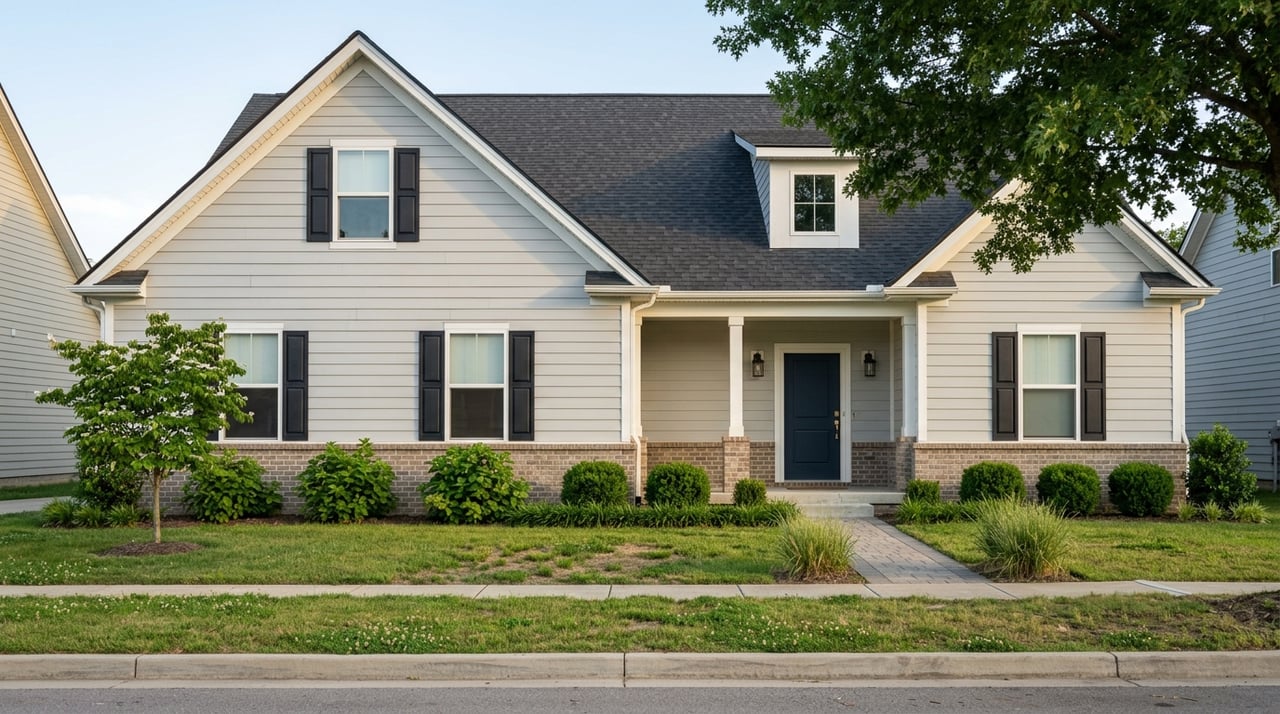
Single-family homes appear especially relevant in Clarksville because they already make up most occupied rental units. They may appeal to households connected to Fort Campbell, local workers, and renters looking for more space than an apartment typically offers. In a market with a strong detached-home base, this product type fits the existing housing pattern.
Duplexes, Triplexes, and Townhomes
Clarksville’s planning documents also highlight missing-middle housing such as duplexes, triplexes, and townhomes. That is useful for investors who want to balance lower acquisition cost than larger multifamily with more than one income stream. It also aligns with the city’s broader supply needs.
Small Multifamily
Small multifamily still has a place in Clarksville, especially for investors focused on efficiency and unit count. But the local data suggests the market thesis is broader than apartments alone. Family-sized rentals and modest-density properties look especially relevant here.
How Clarksville Compares to Other Middle Tennessee Markets
If you are comparing Clarksville to other regional options, entry price is a big part of the story. A recent Zillow snapshot shows Clarksville with an average home value of $322,202 and an average rent of $1,376. In the same snapshot, Murfreesboro was at $430,236 home value and $1,687 rent, Nashville was at $436,603 and $1,825, and Franklin was at $928,567 and $2,132.
The key takeaway is not that Clarksville has the highest rents. It does not. The point is that purchase prices are meaningfully lower than those comparison markets, while rents remain competitive enough to keep investors interested.
Clarksville’s average home value is about 25% lower than Murfreesboro’s, 26% lower than Nashville’s, and 65% lower than Franklin’s. Its average rent is also lower, but not by the same margin. That tends to support Clarksville’s reputation as more of a lower-basis, cash-flow-oriented market than a higher-cost market like Franklin.
The same Zillow snapshot gives Clarksville a rough gross rent-to-value ratio of about 5.1%, compared with about 4.7% for Murfreesboro, 5.0% for Nashville, and 2.8% for Franklin. These are rough inferences, not cap rates, but they still help illustrate the market’s profile.
Why Buy-and-Hold Investors Like the Setup
Buy-and-hold investing usually works best when the market offers three things: durable demand, realistic entry points, and asset types that match local needs. Clarksville shows all three. Population growth, military demand, university enrollment, and affordability pressure all support the rental side of the market.
It also helps that the market appears active rather than stuck. Zillow’s current snapshot shows homes in Clarksville going pending in around 24 days. That is slower than Murfreesboro and Franklin in the same comparison, but close to Nashville, which suggests well-priced properties can still move.
For long-term investors, that can matter on both ends of the hold. You want enough renter demand to support operations while you own the property, but you also want a market where resale is possible when your strategy changes.
What to Watch Before You Buy
Clarksville has strong fundamentals, but buy-and-hold success still comes down to execution. This is a market shaped by military households, students, and cost-conscious local renters. That means property type, location, condition, and management quality can all affect performance.
A practical review before buying should include:
- The likely renter profile for the property
- Whether the layout fits long-term tenant demand
- Ongoing maintenance needs and operating efficiency
- Local vacancy risk by asset type
- Your exit options if you decide to sell later
For out-of-town owners especially, operations can make or break the investment. A property manager typically handles marketing vacancies, showings, applicant screening, leases, move-in and move-out procedures, maintenance coordination, rent collection, and landlord-tenant compliance support. In a market where tenant turnover can shift with military moves or school schedules, those services can be especially valuable.
The Best Fit for a Clarksville Strategy
Based on the local data, Clarksville looks strongest as a market for practical, long-term rental housing. Single-family homes, duplexes, triplexes, and townhome-style properties appear especially aligned with how the city’s rental stock is already used. That does not rule out other asset types, but it does point toward the kinds of properties that fit the market’s current structure.
If your goal is to build or expand a rental portfolio in Middle Tennessee, Clarksville offers a compelling mix of lower entry prices, diverse renter demand, and an established rental base. For investors who want a market that feels more cash-flow-minded than purely appreciation-driven, it is worth a closer look.
Whether you are buying your first rental or adding to an existing portfolio, having a team that can help with acquisition, leasing, and ongoing operations can simplify the process. If you want local guidance on Clarksville investment opportunities or day-to-day rental management, The Scott Zeller Team can help you explore your options.
FAQs
Is Clarksville, TN a good market for buy-and-hold rentals?
- Clarksville shows several traits buy-and-hold investors look for, including population growth, a large renter base, demand tied to Fort Campbell and Austin Peay State University, and home prices that are lower than several other Middle Tennessee markets.
What kind of rental properties work best in Clarksville, TN?
- Local housing data suggests single-family rentals, duplexes, triplexes, townhomes, and small multifamily properties are all relevant, with single-family homes making up the largest share of occupied rental units.
Why does Fort Campbell matter for Clarksville rental demand?
- Fort Campbell contributes a large off-post housing population, and MilitaryINSTALLATIONS reports that 66% of assigned soldiers and families live off post in nearby communities, which supports ongoing rental demand.
How does Clarksville compare to Nashville or Murfreesboro for investors?
- Clarksville generally offers a lower entry price than Nashville and Murfreesboro while still maintaining solid rents, which can make it more attractive for investors focused on lower basis and long-term cash flow potential.
Does Clarksville have strong renter demand?
- Yes. The city reports high rental occupancy, waiting lists for affordable options, and a significant share of renters who spend more than 30% of their income on housing, all of which point to continued demand for rental housing.